

Medical laboratories are essential to modern healthcare, but their growing activity also increases the consumption of energy, water, reagents, consumables and other resources. At the same time, laboratories must remain operational during extreme weather events, infrastructure failures, supply-chain disruptions, cybersecurity incidents, equipment failures and workforce shortages.
Sustainability and resilience should therefore not be considered separate from laboratory quality. A sustainable laboratory must continue to deliver accurate, timely and clinically meaningful results while using resources responsibly and remaining capable of responding to disruption. Recent laboratory sustainability literature has emphasized the need to move from isolated environmental initiatives toward integrated, organization-wide approaches. [1,2]
This article proposes a Sustainable and Resilient Medical Laboratory Framework that integrates six complementary dimensions.
The Sustainable and Resilient Medical Laboratory Framework
The framework recognizes that no single intervention can make a laboratory sustainable. Environmental improvements should not compromise diagnostic quality, digital transformation should not introduce new vulnerabilities, and cost reduction should never restrict clinically necessary testing.
Instead, sustainability should be viewed as an integrated system in which clinical value, resource stewardship, technology, people and resilience reinforce one another.
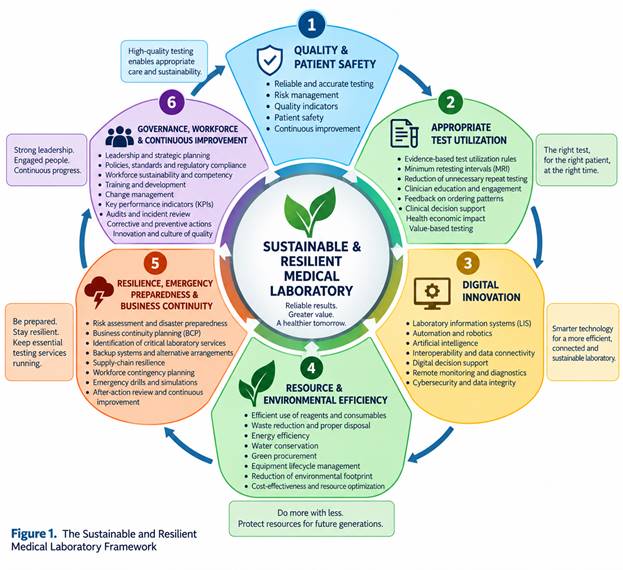 Figure 1. The Sustainable and Resilient Medical Laboratory Framework
1. Quality and Patient Safety
Quality and patient safety remain the foundation of the framework. Reliable laboratory services depend on accurate, timely and clinically appropriate results.
Quality improvement can also contribute directly to sustainability. Reducing specimen rejection, analytical errors, unnecessary repeat testing, inefficient workflows and avoidable delays can simultaneously improve patient safety and reduce the consumption of reagents, consumables, energy and staff time.
Sustainability should therefore be viewed as an extension of quality improvement rather than an additional parallel program.
2. Appropriate Test Utilization
Sustainability begins before a test is performed. The principle should be simple: the right test, for the right patient, at the right time.
Evidence-based test utilization can include clinical algorithms, electronic ordering rules, clinical decision support, feedback on ordering patterns and Minimum Retesting Intervals (MRIs). MRIs help identify repeat requests that are unlikely to provide additional clinical value while allowing appropriate clinical exceptions. CADTH has developed consensus-based MRI recommendations and highlighted their potential role in reducing inappropriate repeat testing and improving resource stewardship. [3]
Clinician education is essential because laboratory utilization is a shared responsibility between laboratory professionals and clinical teams.
Importantly, appropriate utilization is not about simply reducing the number of tests. It is about increasing the value of every test performed.
A practical example comes from a cancer-center quality improvement initiative in which evidence-based MRIs were combined with laboratory information-system alerts and physician education. Over six months, 353 unnecessary tests were prevented, with estimated savings of approximately US$1,750. [4]
This demonstrates how test utilization can connect clinical quality, digital tools, environmental stewardship and health economics.
3. Digital Innovation
Laboratory information systems, middleware, automation, interoperability, artificial intelligence and digital decision-support tools can improve efficiency and reduce unnecessary work.
However, digitalization is not automatically sustainable. Digital systems require energy, infrastructure, maintenance, cybersecurity and skilled personnel. Therefore, technology should be evaluated according to its clinical and operational value, while ensuring data governance, cybersecurity and workforce readiness.
The goal should be appropriate digital innovation, rather than technology adoption for its own sake.
4. Resource and Environmental Efficiency
Environmental sustainability extends beyond waste segregation. The entire testing pathway should be considered, from test ordering and specimen collection to transportation, analysis, reporting, procurement and disposal.
Priority areas include:
- reducing reagent and consumable waste;
- improving energy and water efficiency;
- sustainable procurement;
- responsible equipment lifecycle management;
- reducing unnecessary transportation;
- improving waste treatment; and
- monitoring environmental performance.
Laboratories can develop indicators such as energy per test, water consumption, waste generated, reagent wastage and carbon impact alongside conventional quality indicators. Recent evidence shows that clinical laboratories have significant opportunities to improve their environmental performance through interventions across the total testing process. [1,2]
5. Resilience, Emergency Preparedness and Business Continuity
A sustainable laboratory must also be resilient.
Risk assessment should consider flooding, fire, extreme weather, power or water failure, cybersecurity incidents, equipment breakdown, reagent shortages, supply-chain disruption and workforce shortages.
A laboratory Business Continuity Plan (BCP) should identify critical services, minimum operating requirements, backup utilities, alternative testing arrangements, essential inventories, alternative suppliers, data recovery mechanisms and workforce contingencies. WHO guidance emphasizes risk-based preparedness and resilience for laboratories responding to outbreaks and other emergencies. [5]
Importantly, preparedness should be tested through tabletop exercises, simulations and appropriate emergency drills, followed by after-action reviews and corrective actions.
Plan → Test → Learn → Improve → Retest
A BCP that has never been tested remains largely a plan on paper.
6. Governance, Workforce and Continuous Improvement
Sustainability and resilience require leadership, accountability and continuous improvement.
Laboratory governance should establish measurable objectives and integrate quality, environmental and resilience indicators into routine performance monitoring. Workforce development is equally important. Staff need appropriate competencies in quality management, digital technologies, emergency preparedness and sustainable practices.
Cross training can strengthen resilience by reducing dependence on individual staff members, while continuous competency assessment supports safe adaptation to changing technologies and workflows.
Ultimately, sustainability should become part of the laboratory culture rather than an isolated project.
From Individual Initiatives to System Transformation
The greatest value comes from connecting the six dimensions.
Better test utilization reduces unnecessary consumption; digital tools enable appropriate utilization; quality improvement reduces errors and waste; environmental management improves resource efficiency; workforce development supports implementation; and emergency preparedness protects continuity.
The result is not simply a “green laboratory,” but a laboratory that is clinically valuable, resource-efficient, digitally capable and resilient to disruption.
Conclusion
Building sustainable and resilient medical laboratories requires a shift from isolated initiatives toward an integrated operating model. The proposed framework combines quality and patient safety, appropriate test utilization, digital innovation, resource and environmental efficiency, resilience and business continuity, and governance and workforce development.
The laboratory of the future should not be defined by how much it consumes, but by how effectively it creates value from every test, every resource, every technology and every person involved in laboratory medicine.
References
- Badrick T, Aykal G, Mannisto T, Anetor J; IFCC Task Force on the Environmental Impact of Laboratory Medicine. Practical sustainable laboratory medicine. Clin Chim Acta. 2025;576:120428. doi:10.1016/j.cca.2025.120428.
- Shorten RJ, et al. Environmental sustainability of clinical laboratories: A scoping review. Ann Clin Biochem. 2026;63:208–227. doi:10.1177/00045632251391759.
- CADTH. Advisory Panel Guidance on Minimum Retesting Intervals for Lab Tests. Ottawa: CADTH; 2024.
- Ghaleb F, AknouKh B, Eliraqy MR, Mahfouz MA, Sayed A, Abdou BA. Implementation of Evidence-Based Minimum Retesting Intervals to Enhance Laboratory Efficiency and Cost Control in a Cancer Center. Am J Clin Pathol. 2025;164(Suppl 1):aqaf121.292. doi:10.1093/ajcp/aqaf121.292.
- World Health Organization. Outbreak preparedness and resilience. Geneva: World Health Organization; 2020. (Laboratory biosafety manual, fourth edition and associated monographs).