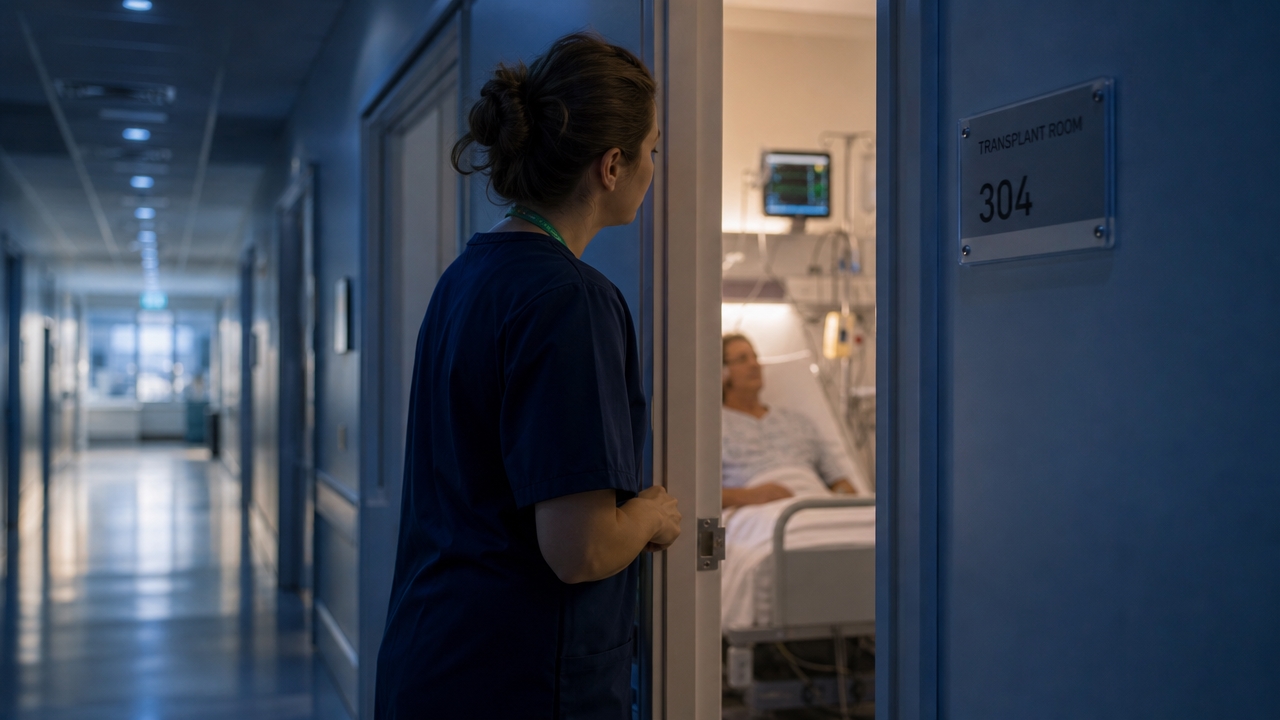

There is an age-old, unresolved paradox at the heart of medicine: those who care for others are often the least equipped to look after themselves. Not for lack of empathy — if anything, because of an excess of training in resilience, self-control and emotional detachment. When an adverse event occurs, the healthcare system knows what to do with the patient. It almost never knows what to do with the healthcare professional who is left behind.
Albert Wu gave this figure a name in 2000: the ‘second victim’. An expression which already contains, in its very structure, an unresolved tension. A victim, yes — but of whom? The question seems simple. It is not. And it is precisely within that question that lies everything the healthcare system still struggles to face head-on.
The most convenient answer is: a victim of the system. And it is often true. James Reason has taught us that errors in healthcare are almost always the final outcome of a chain of latent conditions — shifts, workloads, missing safeguards, poorly designed processes. The professional who carries out the final act in a flawed sequence is not the sole cause of the harm: they are the point at which systemic dysfunctions become visible, the human face of a failure that belongs to the organisation. Shifting that collective responsibility onto them and turning it into individual blame is not justice: it is institutional expediency.
But the most honest answer is that the second victim is often also a victim of their own making — and not in the trivial sense of negligence. They are victims of a professional identity built on the myth of infallibility, of a training system that has taught them not to make mistakes without teaching them what to do when they do. The doctor who does not ask for help, the nurse who does not report uncertainty, the technician who carries on despite their doubts: these are figures that the system has moulded in its own image, and whom the system now fails to recognise in their hour of need. There is something cruel about this. And something structural.
There is also an even more silent dimension, which recent literature has begun to name without yet fully managing to define: the second victim as a wound to one’s own ideal of care. Those who choose a healthcare profession almost always do so driven by something akin to a vocation — a desire not to cause harm, to be of service, to stand on the side of life. When a mistake occurs, it is that inner core that is struck first, even before external judgement is passed. The rift is not between the professional and the system: it is between the professional and the self-image that had led them there. No protocol teaches how to mend this rift. No structured debriefing reaches that depth.
The literature of the last two years has shifted its focus from describing the phenomenon to developing responses. The RESCUE framework, published in 2025, proposes a European certification scheme for corporate support programmes: early identification, peer support, access to psychological support, and integration with risk management. It is an important, necessary step – but perhaps not. Because structured programmes work when the cultural climate is receptive to them, and that climate is known as ‘just culture’: an organisation’s ability to distinguish between human error and deliberate misconduct, to respond with fairness rather than punishment, and to transform reporting into an act of collective responsibility rather than an individual risk. Without just culture, every support programme remains a friendly island in a hostile archipelago.
There is one surprising aspect in the most recent literature that deserves attention: the phenomenon of the ‘second victim’ begins well before entry into the profession. Two systematic reviews from 2024 document that medical and healthcare students — exposed to adverse events during their placements — develop the same symptoms as experienced professionals. And that the supervisor’s reaction at that moment, at that precise instant, leaves a lasting mark on the professional for years to come. The ‘second victim’, in other words, does not emerge on the ward. It emerges in the lecture theatre, in the corridor during clinical training, at the very moment when someone chooses whether to treat the error as a fault to be concealed or as an experience to be worked through together.
The end point — and the starting point — is always the same: an organisation that knows how to look after those who have made a mistake is an organisation that learns. Not out of generosity, but out of wisdom. A supported professional speaks up. Those who speak up contribute to knowledge. Knowledge drives change. Change reduces risk. The chain is straightforward in its logic, but fragile in its implementation: all it takes is a punitive atmosphere, a mentor who humiliates, or a report that goes unanswered, for the entire cycle to be interrupted and the error to remain unspoken, ready to be repeated.
Perhaps the real question is not who the second victim is, nor whose victim they are. The real question is what a healthcare organisation chooses to do with that suffering: whether it treats it as a problem to be managed or as a resource from which to learn. The difference between the two choices is not technical. It is moral. And it is that difference, more than any protocol, that determines whether a healthcare system is truly safe — or merely appears to be so.