
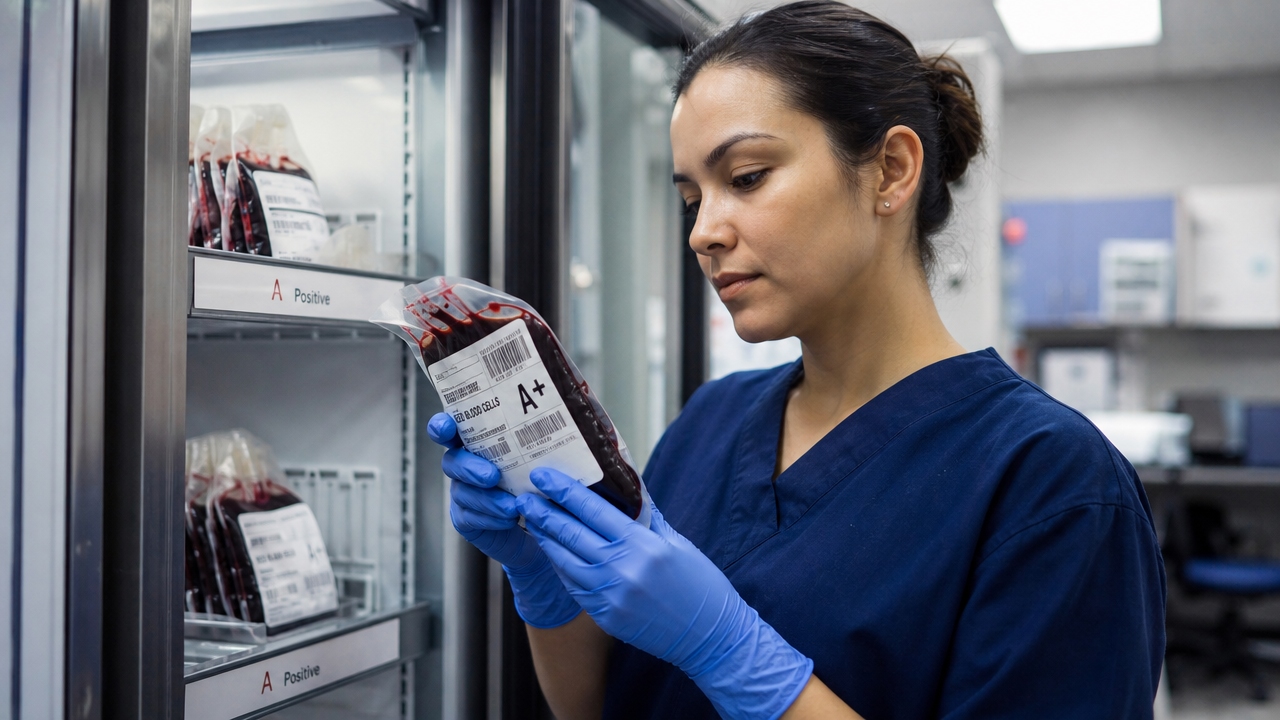
Every unit of blood carries an implicit promise: that if something goes wrong, we can find our way back — from the patient's bedside to the bag, to the donation, to the donor — and forward again to every other component that donation produced. Traceability is the machinery that keeps that promise. Traceability is not just paperwork wrapped around transfusion; it is the quiet backbone of hemovigilance and the thing that makes safe transfusion possible.
The requirement that every blood donation can be followed to every recipient, and vice versa, is one of the defining characteristics of modern transfusion medicine. A surgeon's implant carries a lot number; a pharmaceutical product carries a batch number. Only transfusion medicine assigns a unique identifier to an individual donation and follows it—by design, and in much of the world by law—from a healthy donor through processing, to the vein of one specific patient, and back again. The donation identification number is not an administrative detail; it is the discipline's defining instrument. Under the ISBT 128 standard, that number is engineered to remain unique across a rolling 100-year window, ensuring that no two donations identified within that span can ever be confused.
Traceability is only as strong as its weakest link, and the chain is long. A single donation is tested, separated into red cells, plasma and platelets, stored under different conditions, and issued to different patients, perhaps on different days. Barcoding is what holds this together. At donation, the unique identifier is assigned; at every subsequent step—component preparation, labeling, storage, crossmatching, and issue—it is scanned rather than transcribed, because a scan does not misread a digit the way a tired hand does. The barcode and its human-readable text travel with the unit, so that even if scanning fails, identity can still be verified. This is the practical meaning of end-to-end: not a single record, but an unbroken sequence of verified identifications from the donor's arm to the patient's vein.
The chain exists, above all, to stop the wrong unit reaching the wrong patient. Most serious transfusion harm is not exotic. It is a mismatched unit transfused because identity broke down somewhere—a mislabeled sample tube, a wristband not checked, the right-looking bag hung at the wrong bed. The patient bedside is one of the most dangerous points in the entire chain, because the final identity check there is made by a human under pressure. Traceability turns that check from memory into verification: barcoded patient wristbands, sample labeling at the point of draw, and electronic identity matching at the moment of administration, so that unit and patient are confirmed to belong together before a drop is given. The unique identifier, scanned at the bedside, is a critical barrier against a fatal error.
Traceability works in both directions. Backward traceability allows a blood component to be traced from the recipient back to the donor, while forward traceability follows a donation from the donor to every component produced and every recipient exposed. When a donor is subsequently found to have a transfusion-transmissible infection, forward traceability enables a look-back investigation by locating all implicated components, quarantining any that remain in stock, and identifying recipients who require investigation and follow-up. The same traceability framework underpins product recall. A recall may be triggered by newly identified donor risk factors, post-donation information, laboratory errors, equipment malfunctions, reagent failures, or the discovery of a transfusion-transmissible infection after donation. In such situations, speed is critical. The blood bank must be able to determine within minutes which components remain in inventory, which have been transferred to other facilities or hospitals, and which have already been transfused. Every affected unit must be identified, quarantined, retrieved, or withdrawn from use without delay. Hospitals and clinicians must be notified, and all actions must be documented to demonstrate that the risk has been effectively contained.
With traceability, a recall becomes a targeted intervention rather than a blind search. Instead of questioning the safety of hundreds of units, the blood bank can identify the exact components affected and the exact patients potentially exposed. The same event that could have evolved into a widespread patient safety incident becomes contained, auditable, and manageable. Recall is where traceability stops being a record and becomes patient safety in real time.
However, no two countries arrive at traceability the same way, and the global picture is a spectrum rather than a contest between two models. At one end sit mature, mandated systems. The European Union makes traceability a legal duty under Directive 2002/98/EC, requiring donor-to-recipient tracking in both directions and retention of records for at least thirty years. In practice, this is facilitated by widespread use of standardized donation identification and labeling systems, predominantly ISBT 128. Some countries concentrate this in a single, highly centralized national blood service, as in the United Kingdom and Japan, which makes the chain easier to standardize; others, such as the United States, achieve it through regulation and accreditation across a more fragmented landscape. India represents a different model. Rather than consolidating blood banks into a single operational service, it has adopted a centralized digital backbone through eRaktKosh, an initiative of the National Health Mission under the Ministry of Health and Family Welfare, Government of India, while retaining a decentralized network of independently operated blood centres. The destination is shared; the routes are not.
Every bag has a name. More importantly, every bag has a history, a destination, and a trail that can be followed whenever questions arise. The donor who gives blood, the technologist who processes it, the clinician who orders it, and the patient who receives it are all connected by that chain. When the chain is complete, errors can be prevented, recalls can be executed with precision, investigations can be conducted with confidence, and trust in the blood supply can be maintained.
In transfusion medicine, traceability is not merely a regulatory requirement or a quality indicator. It is the mechanism by which accountability becomes visible and safety becomes measurable. Every scan, every record, and every verification step contributes to a simple but profound promise: that every unit of blood can be identified, tracked, and accounted for from donor to recipient and back again. That promise is why every bag has a name—and why every name matters.