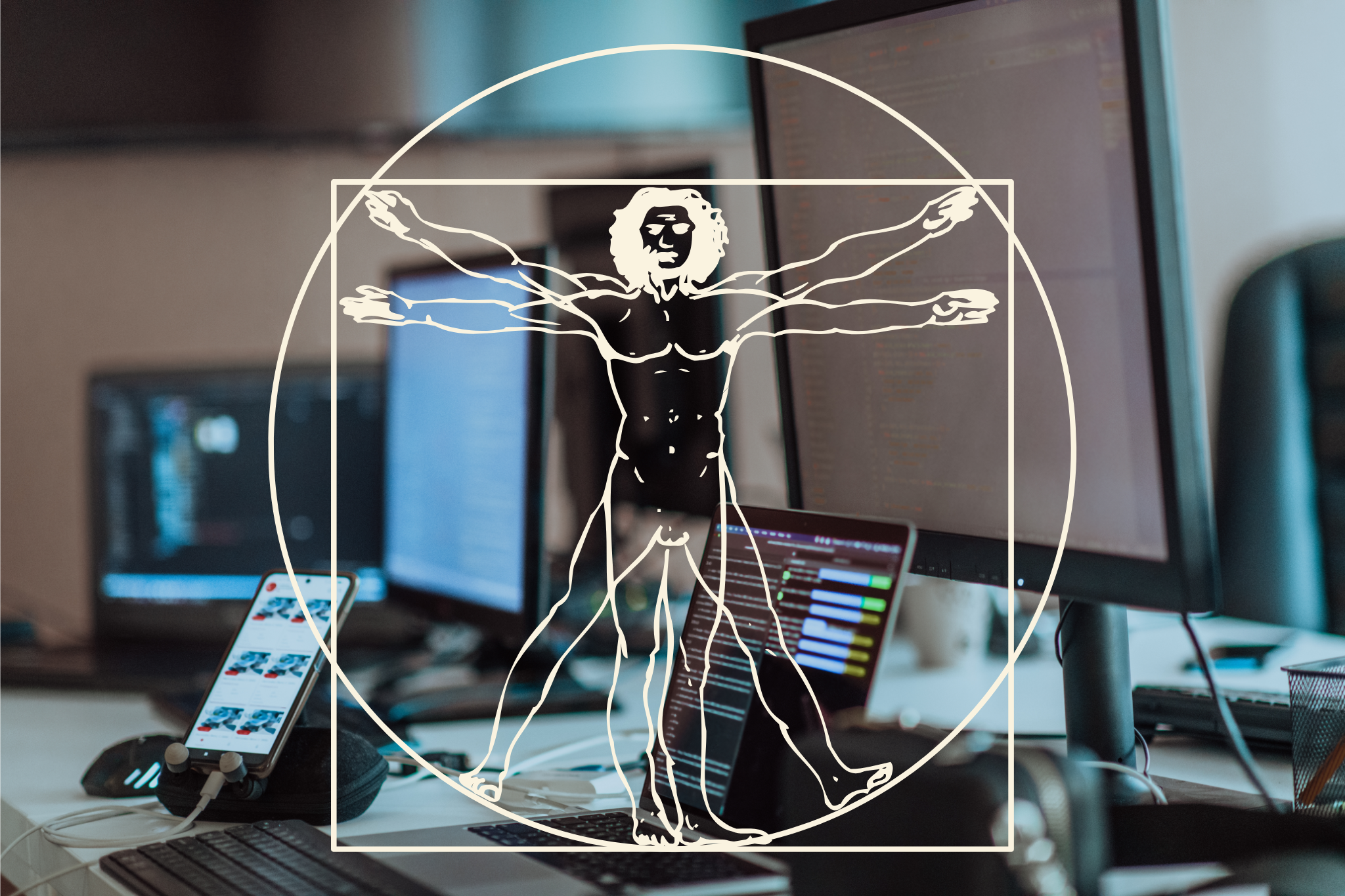
I want, as an internist and haematologist, to talk to you about a dream of mine, a dream of a “techno-human health care, or rather I would say “human-technological”, which is concerned with caring for the person in the fullest sense of the word.
Certainly somecare settings want efficiency, thus speed,thus speed of intervention,and a sensible efficiency, and speed of intervention.
Certainly somecare settings wantefficiency,thus speed of intervention,effectiveness,thus brilliant results,appropriateness,thus safe care, in step with best practice,but this is not enough because there is no communication with the person, not even when the emergency phase is over.
They are not able to communicate with the person, even when the emergency phase is over.
As the years go by, and observing myself and colleagues, I find more and more of this tendency, not only in the PS, but also in the in-patient operating units, and this is not good medicine.
I do not want to attribute this to the fact that the patient is not a good doctor.
Of course I do not want to apportion blame, we are often too tired, patients and relatives want more and more, they are often arrogant and pretentious, but we have to ask ourselves a question and answer ourselves sincerely: how much do we really communicate and still if we were in their place?
Humanise: categorical imperative of the future
What does humanisation of services mean? What does it mean “patient” at the centre?
These seem to be obvious concepts, we have been talking about them for years, too many, with a health care that, on the contrary, evolves technologically and this is welcome, but patients perceive it as less and less attentive to the person, “plunged” into technology, submerged by the relationship with computers, with platforms, with e- learning machines.
Then let us define the humanisation of services, and let us define the future.
Then let us define what is really meant by the humanisation of services, beyond declarations of intent, beyond the words behind which super-specialisation is masked, which can make doctors and care staff arid and lacking in empathy, leaving the patient with a feeling of “abandonment” of his or her experience, fears and anxieties.
And yet, in the face of a serious illness, such as “cancer” for example, follow-ups have increased, creating an umbilical cord between hospital and patient, follow-up examinations have increased, telemedicine has been introduced to be closer to patients, or perhaps, to their symptoms, despite this patients feel alone.
Doctors are increasingly dissatisfied because?
Are patients becoming more and more “distrustful” becauseé?
Certainly not generalisable, but one swallow, they say, does not make a summer.
The key word, for a more humane health care, that those who care and assist, should “put themselves in the shoes of” they must think about how the other is feeling, what they are experiencing.
In addition to feeling, it is necessary to learn how to communicate, remembering that gestures, posture, hand movements, and gaze are also part of the “big family” of communication: non-verbal communication.
From what I am writing one might think that the critical point of all humanisation is communication: è but only partly true, the other very important point è empathy.
I happen to see doctors who focus so much on the examinations performed that they lose sight of the person in front of them, certainly or almost certainly they will make a diagnosis, but they totally lack that affection, allow me the term, which reassures and makes one feel cared for.
For nurses, attention to need is often overshadowed by haste, which is different from efficiency, so that, for example, patients who are in the hospital ward do not receive any attention, not even for the smallest needs, such as drinking and going to the toilet.
How sad it made me, after an excellent triage and a good diagnosis the patient abandoned in what, we doctors ourselves call, the “circle of hell”, waiting for an admission that “will happen".
This è lack of empathy ultimately backfires on the staff themselves, arousing violence in patients and relatives who wait without knowing anything and demotivating doctors and nurses.
Am I justifying violence? No, of course not, but believe me, if you are on the other side you feel you have no other way of interacting than to verbally assault those who, passing by, do not dignify you with a glance: it would be enough to inform, to say that we are waiting for examinations, that we are taking care of the sick person, that nothing serious is happening, that the waits are long and that we understand that they may be full of tension: “do you need?” È a rare question, we pass with indifference, hiding behind a uniform that becomes an armour of carelessness and dehumanisation.
Therefore, to humanise care è it is necessary for doctors and nurses “discontented”, to be fformed with serious role-plays, which put them on the other side, on the side of those waiting for a little word of comfort and a smile and, allow me also a little education.
Doctors and nurses also need to feel a closer direction, an appreciation for those in the trenches, a search, together, for a solution that does not only look at productivity, but that finally makes them feel a sharing and a co-participation that comforts.
In a survey we carried out on doctors for a master's thesis, it emerged with sadness that 70% of them would no longer choose the faculty of medicine, because the profession has been devalued and there are no real reasons to appreciate it.
The humanities are not the only ones who would like to be a doctor.
To humanise the services, we must humanise the workers otherwise we will never solve anything.
Kindness as the first step of humanisation.
Many of us are competent, good doctors, technically speaking, but really how often do we apply the kindness that would trigger a virtuous circle?
Fatigue never justifies being grumpy or even rude.
Kindness è contagious, è it is difficult to be violent to those who address us with kindness.
Being kind means being noble in the profession, knowing how to overcome our difficulties, our tiredness and our, albeit legitimate, frustrations, in order to approach and reassure the other, it means “I understand that you are suffering and I am doing all I can to help you, I ask for a lot of patience, I know, forò you are there for me and I am there for you”.
Kindness è consists of understanding as well as good manners.
I happened to ask a colleague, as a doctor, about a friend who was in a serious condition, who, I was told, had woken up from a coma, and whom I had gone to visit.
I found the patient in a coma, and I was there.
I found the patient still comatose and, placing my hand on his forehead, I realised he was feverish. I asked to speak to a colleague, and when I did, he had a shifty and uneducated attitude, talking to me as he turned his back to me to leave.
The patient was still comatose, and when I put my hand on his forehead, I realised he was feverish.
It is clear that I, as a doctor, know how to behave and I nailed him “with his responsibilities, even embarrassing him, but believe me, if I had not been a doctor, I would have become aggressive, because he denied the presence of an objective sign, not listening to me at all. Of course then the universe was activated.
This episode has been a great lesson to me throughout my career, active listening would have sufficed and a clinically difficult situation would have been avoided, in which his competence and attention to the patient also came into question.
Nothing is achieved without kindness.
Active listening as the second step of humanisation
The example I gave earlier also signals another critical issue.
Doctors and nurses tend to listen to patients very little, as Prof Veronesi also said, the time spent listening to a patient, had this parameter measured; è a few seconds. It seems impossible but it really is. After a few words, we think we have understood and we no longer listen to the rest, which, instead, could be very useful.
To humanise a service, it is necessary to really listen to the patient, without looking at the computer, dedicating all our attention to the “person” that we have in front of us, which sums up the overused concept of “patient at the centre”.
Active listening means looking into the eyes, suspending judgement, being present.
Without computers between us.
Without thinking about what is coming next.
Without thinking about what is coming next.
With the soul, not just the ear.
Information and sharing: true informed consent
We often hide behind technical-scientific language, we certainly hide and unconsciously distance ourselves from the patient. Some people will say that it is not true and I say “very good, bravo!”, but it may be that the statement is self-referential, because I have never verified that it is really so.
I was very favourably impressed when the surgeon explained to me the whole procedure I was facing, he involved me in the decision of major or minor radicality, but I am a doctor and the language I use is the same as my colleague.
Difficult decisions must always truly involve the patient and the doctor.
Unfortunately, I noticed that a renowned surgeon, dumped on the patient and family members a decision that was too difficult for them, simply because, it was clear to me, he did not want to operate on that patient who was unfortunately destined to become “terminal” in a short time. The decision had to give the patient serious information about how much longer he could live, with a great deal of suffering, and what a statistical percentage of extra life the surgery would give him. This was not done, on the contrary, it threw the whole family into a state of anxiety and despair that really should have been avoided.
Informed consent is not è a form to be signed.
è a pact of trust. &Eegrave; the building of an alliance.
Humanising è explaining. È taking the time to make people understand. È walking together.
Deep respect for the dignity of the patient
The dignity of the patient is not only measured in grand gestures, but in every attention, in every carefully chosen word.
Even a motionless body needs respect. Even a suffering face has a right to the beauty of a kind gesture.
The dignity of the patient is not only measured in grand gestures, but in every attention, every carefully chosen word.
Dignity; è not to call the patient by pathology (“bed 3”), è cover him/her during a visit, è wait until he/she finishes talking, è respond even when we have no answers.
è this is the respect that cares.
Smile as a way of relating:
All too often health workers and doctors appear serious and distant.
A piece of advice I would give to everyone è this: we must always remember that a smile è a silent embrace that envelops and reassures the patient, soothes him/her.
Bringing a smile into a room è like letting in a breath of fresh air, è letting the light filter through closed shutters, è gently caressing the complexity of a human relationship.
We learn to smile even when we are nervous, tired, worn out by fatigue, because smiling is also a therapy for ourselves as well as an integral part of healing.
The smile è welcome. Dedication that shines through even in a face that is tried and tested.
The smile è “being there” for real, è looking at the other person and deciding to enlighten them with a fragment of humanity
The smile è fulfilling. For the one who receives it. And for the giver.
The smile è fulfilling.
Working also with the heart because “passion” is felt è another important step of humanisation.
He who heals without passion is extinguished. And they extinguish.
Working with the heart does not mean being perfect, but being present with all that we are: science and conscience, technique and emotion.
The patient perceives who has passion. He hears it in his voice, in his gaze, in the time he devotes.
Passion cannot be taught, but it can be cultivated, nurtured, protected.
The patient perceives those who have passion.
We must rediscover and then protect the passion we have lost, despite everything (the bureaucracy, the budget, the DRGs, the budget..)it seems to want to take it away from us, we must go back to the time when we chose to “be doctors or nurses.”
Let's not let the system rob us of our passion only then will we be technologically human and our misery benefit.
’the only way to come out a winner, us and the patients.
Conclusions
I will never stop believing in this dream:
I dream of hospitals that smell of humanity, even among the crowded wards.
I dream of medics and nurses who feel part of a noble profession, not just a shift.
I dream of patients who feel seen, heard, welcomed, understood.
Of course, maybe è utopia, but every true change is born from a dream.
And I, that dream, have it in my heart.
Every day. Every patient. Every time I enter the ward.
Because medicine without humanity is just technique.
But with humanity, it becomes a miracle again.
The message is that medicine is a miracle.
The message è simple but powerful: technology needs to be embraced, mediated, integrated into daily work, otherwise it remains a closed box, full of promise but lacking real impact and even harmful.
Technology è always relationship. Relationship between devices and people, between data and context, between algorithms and clinical consciousness. Every success stems from the ability to integrate the digital into the living fabric of care, every failure stems from the disconnect between innovation and reality. Health workers, doctors, nurses and technicians are called upon to become artisans of change, capable of using the most modern tools but without ever forgetting that at the centre there is always a person, with his or her body, his or her story, his or her trust.
The success of the digital world is born from the ability to integrate digital into the living fabric of care.
Welcome technology, no one is opposed to the future, which è already exists today, but let us not lose the strength of “that “humanit’ in feeling” which distinguishes the “good” from the “excellent.
Bibliography
- Veronesi, U. (2008). Dell'amore e del dolore delle donne. Einaudi.
For his humanistic vision of medicine and for the explicit reference to the theme of listening in the healing relationship.
- Tronto, J. C. (1993). Moral Boundaries: A Political Argument for an Ethic of Care. Routledge.
One of the seminal works on the ethics of care, useful in supporting reflection on the humanisation of care.
- Lown, B. (1996). The Lost Art of Healing: Practicing Compassion in Medicine. Ballantine Books.
A classic that addresses the loss of the relational dimension in modern medicine.
- Egnew, T. R. (2005). "The Meaning of Healing: Transcending Suffering." Annals of Family Medicine, 3(3), 255–262.
A key article that helps define the deeper meaning of “caring” as a response to suffering.
- Montini, T., & Mastroianni, A. (2014). Empathy and caring relationships. Il Pensiero Scientifico Editore.
A useful Italian volume to contextualise in a concrete and formative way the practice of empathy in everyday clinical work.
- Gawande, A. (2014). Being mortal. How to choose your life to the end. Einaudi.
Fundamental text on respect for the dignity of the patient, with a focus on the final phase of life.
- Charon, R. (2006). Narrative Medicine: Honoring the Stories of Illness. Oxford University Press.
Foundational work of narrative medicine, useful for supporting the themes of storytelling, active listening and respect for the subjectivity of the patient.