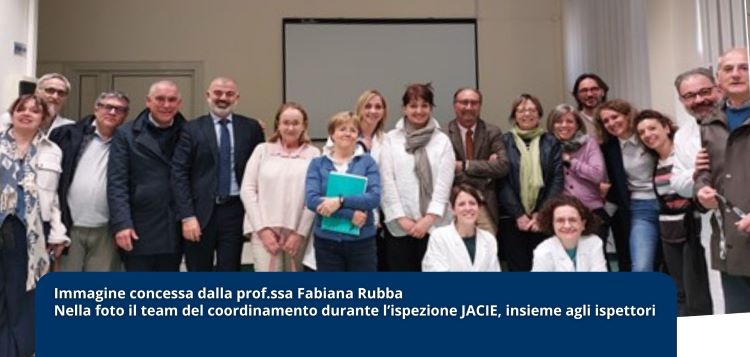
Innovation in stem cell transplantation centres is a crucial element in improving the quality of care, increasing the effectiveness of treatments and ensuring patient safety. The FACT-JACIE standard, now in its eighth edition, represents an international benchmark for quality in the collection, processing and administration of haematopoietic cell products. Developed jointly by FACT (Foundation for the Accreditation of Cellular Therapy) and JACIE (Joint Accreditation Committee of ISCT and EBMT), it is based on principles of excellence and innovation encompassing all phases of the cellular therapy process, requiring transplant centres to constantly adapt to new technologies and methodologies. The FACT-JACIE standard embodies this continuous evolution, promoting the adoption of innovative, high quality solutions at every stage of the therapeutic pathway.
Multidisciplinary Approach and Continuous Education
The standard emphasises the importance of an integrated medical team, with advanced skills in different specialist areas such as haematology, oncology and immunology. Continuing education è mandatory for staff, with at least ten hours of annual refresher training for physicians and practitioners involved in cell therapy. This approach ensures that staff are always up-to-date with the latest scientific and technical findings.
Quality Management
A fundamental element is the Quality Management System, which permeates every stage of therapy, from cell collection to infusion. Innovation in this context translates into the adoption of rigorous protocols for the traceability of cell products (chain of custody and chain of identity), microbiological safety and minimisation of the risk of post-transplant complications.
Use of Innovative Products
The FACT-JACIE standard embraces the use of innovative cellular products, including genetically modified and immune effector cells (IEC). The integration of these new therapies offers advanced therapeutic possibilities for oncological and genetic diseases, demonstrating how innovation drives clinical progress in transplantation centres.
The FACT-JACIE standard embraces the use of innovative cellular products, including genetically modified cells and immune effector cells (IECs).
Clinical Research and Experimentation
Clinical research is a pillar of innovation in transplant centres. Clinical programmes are encouraged to participate in clinical trials and collaborate with academic and industrial institutions to develop new therapies. Collecting data on clinical outcomes and analysing them allows protocols to be continuously improved and adapted to emerging needs.
Manipulation and Storage Technologies
The adoption of advanced technologies for the processing and preservation of cell products ensures that cells maintain their viability and functionality. Techniques such as cryopreservation and extracorporeal photophoresis are examples of how technological innovation contributes to improving product quality and patient safety.
The adoption of advanced technologies for processing and preserving cell products ensures that cells retain their vitality and functionality.
The’Adoption of Innovative Solutions in Transplant Centres: Benefits and Opportunities
Technological advances and the introduction of innovative standards are revolutionising the activities of transplant centres, improving the quality of treatments, ensuring greater safety and expanding the therapeutic options available. This advanced approach enables centres to successfully address increasingly complex challenges in the field of cell therapy.
A first concrete benefit is the improved clinical outcomes. The standardisation of processes, promoted by international standards such as FACT-JACIE, reduces the risk of complications and increases the probability of successful transplantation. Uniform and well-defined procedures, complemented with state-of-the-art technologies, enable more effective patient management and timely intervention on critical issues.
Another fundamental aspect is patient safety. Strict traceability and quality control protocols ensure that cell products are safe and free of contamination. For patients who are often immunocompromised, this level of care is essential to minimise the risk of infection or error.
The expansion of therapeutic opportunities represents an additional benefit.
In conclusion, innovation in transplant centres has become a necessity in order to respond to emerging challenges and offer patients increasingly effective treatments. The FACT-JACIE standard provides essential guidance for operating at the highest levels of quality and safety, helping to define the future of cellular therapy. Thanks to this approach, transplant centres continue to play a key role in the evolution of medicine, offering new therapeutic perspectives and improving standards of care.