
There is a question that runs through, often silently, every hospital ward, every laboratory, every operating theatre: who takes care of the system that takes care of the patient?
.
This issue of ICMED Magazine was born around that question. We did not plan it that way; — the contributions have come from different contexts, different countries, different professions. Yet, rereading them together, a thread emerges that runs through them all with surprising coherence: clinical quality is not just a technical fact. It is an organisational fact. And it is, ultimately, an ethical fact.
But before we get into the content, allow me a personal — indeed, a team note.
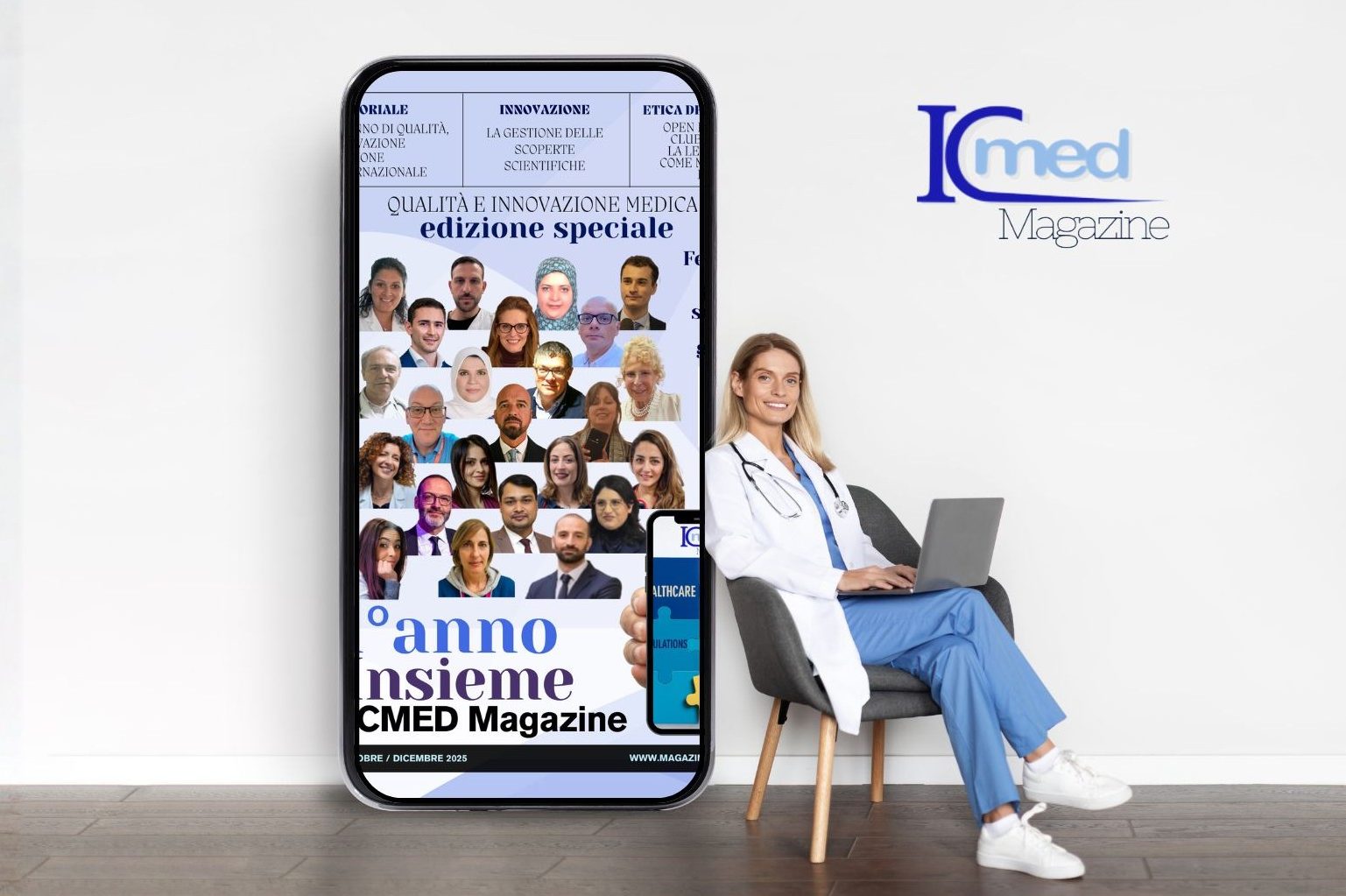
With this issue, ICMED Magazine takes a step that for us has a meaning that goes beyond the editorial data: we have officially become publishers. ICMED S.r.l. is now to all intents and purposes a publishing house, with all that this entails in terms of responsibility, rigour and commitment to our readers and authors. This is not a foregone conclusion for a company like ours, which started out as a consulting firm and grew, issue after issue, to become a publishing reference point in the panorama of quality and medical innovation in Italy and Europe. È the result of a path we have built with determination, and of which we are genuinely proud.
This is accompanied by another visible change: from this issue, our online magazine gets a makeover. The magazine.icmed.net site gets a complete makeover — a more modern graphic layout, smoother navigation, and a reading experience that matches the content our authors entrust to us. Because form is part of the message, and a quality writer cannot afford to neglect it.
That said, let us return to the heart of this issue.
Federica D'Amato reminds us that KPIs in PMA labs are not for counting results, but for understanding what is really working — and what is not. A misinterpreted indicator, lacking clinical context, can do more damage than no indicator at all. The data does not speak for itself: it needs someone who knows how to listen to it and a system that knows how to respond to it.
Jackie Thomson, from the Wits Donald Gordon Centre in Johannesburg, goes further. He shows us that the real limitation of transplant governance is not the lack of data, but the choice of the wrong data. To focus only on 100-day mortality is to measure what has already happened, without being able to intervene. Instead, we need to build lead measures — anticipatory indicators, daily processes on which to act before the outcome crystallises. È a lesson that is worth far more than transplantation.
Adriana Degiorgi and Alan Valnegri bring the experience of the Ente Ospedaliero Cantonale in Switzerland and show us what happens when multidisciplinarity stops being a good intention and becomes a governed process. Multidisciplinary Meetings, integrated in the digital medical record, have transformed collegiality into traceability. The 96% of oncology cases discussed in MDM in 2024 is not just a number: it is proof that quality can become a shared and observable responsibility, no longer entrusted to the charisma of the individual.
Tommaso Mannone completes this picture with a reflection on HTA that struck me for its clarity: wasting a health resource is not just an economic problem — it is a clinical risk. PDTA, digital dashboards and HTA assessments, when they stop operating in separate silos and integrate in a virtuous cycle, become the premise of any truly modern clinical governance. Not an academic luxury, but an enabling condition.
Naglaa Elwkil brings the voice of the apheresis nurse — a figure that rarely occupies the front pages, yet guards that fine line between technical precision and human care every day. His final reflection — the tiniest cells contain the greatest hope — seems to me the truest synthesis of this issue: even the most technical gesture, if carried out with awareness, becomes an act of cure.
Renata Vaiani, with her usual acuity, tackles the most difficult cultural knot: the meaning of procedures. They are not a limit to clinical freedom — they are the condition for that freedom to make sense. A professional who knows how to deviate from protocol, and can explain why, is no less free: he is more responsible. The real difficulty, he writes, lies not in the procedures, but in the idea we have of them.
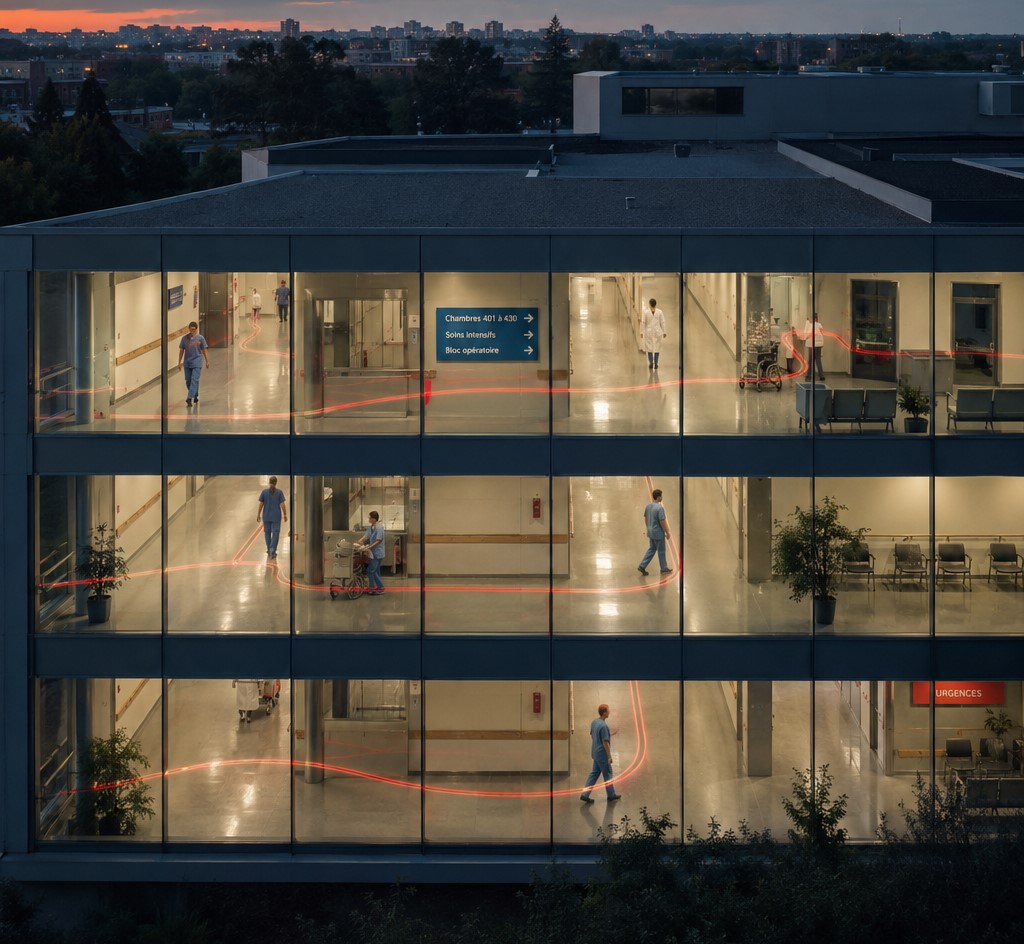
Finally, Fabiana Rubba and colleagues take us to the operating block of the AOU Federico II — a place where the care path literally becomes a physical path. Corridors, filters, intersections, overlapping flows. Every ungoverned interference translates into vulnerability. The solution does not involve major architectural renovations, but sustainable organisational measures: signage, checklists, protected corridor protocols. Small choices, big impact.
What strikes me, rereading these contributions together, is that none of them speak of technology as a panacea. They all, in different ways, talk about culture: the culture of measurement, the culture of traceability, the culture of shared responsibility. They speak of organisations that stop delegating quality to individual talent — which is also essential — and start building systems capable of making it harder to make mistakes and easier to cure.
Adriana Degiorgi says this in words that I found particularly effective: it is not technology that generates security, but the ability of the organisation to embed the decision in a coherent and documented framework.
Here is the red thread of this issue. Organisation is not the opposite of care. &Eegrave; the form that care takes when it wants to be safe, fair, replicable — when it really wants to apply to all patients, not just the lucky ones.
To you, readers old and new, welcome to the new ICMED Magazine. Happy reading.
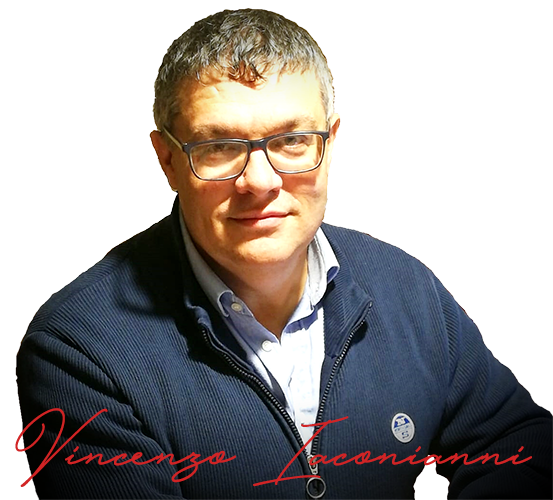
Vincenzo Iaconianni Amministrator Unico, ICMED S.r.l.