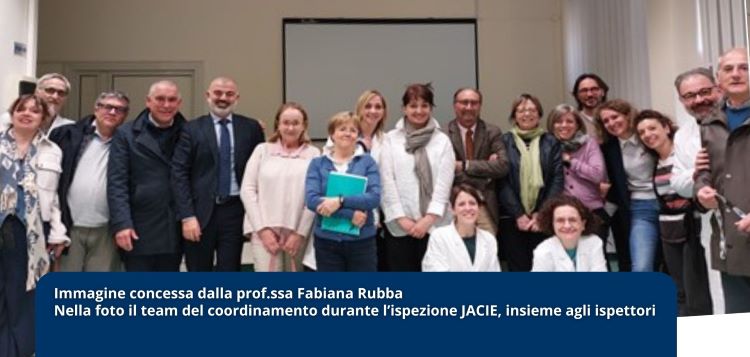
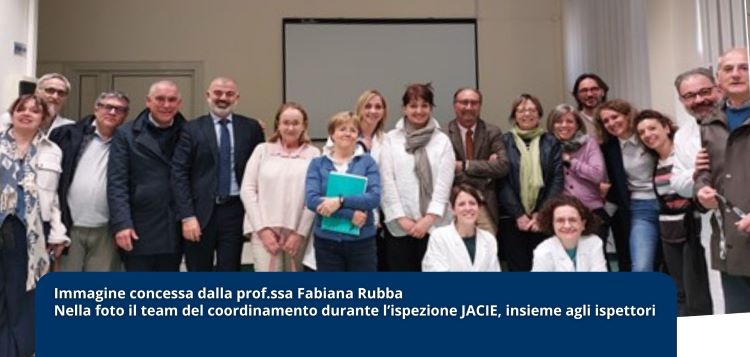
F Rubba, D Borzacchiello, R Egidio, A Arenella, A Capasso, S Maiello, A Borrelli, S Avilia, C Andretta, G Battipaglia
1. Introduction
Evidence Based Medicine (EBM ) is to be appropriately placed in the clinical and care process, accepting also so-called limited rationality models for those situations where there are cognitive noise or bias (1,2); the methodology has been enriched with participatory knowledge and person-centred indicators (PROMPT), focused on perception and on the particular view of the world.
This dimension can help to support the quality system in the accreditation of complex pathways such as transplantation programmes and those institutions of the health care system, which also have an academic-scientific mission also defined as training centres.
The aim of working on quality is to discover new and better treatments, provide comprehensive care and improve the quality of life of patients through evidence-based medicine with an interdisciplinary approach (3-5). In this configuration, the HSC Transplant Programme in its three units (Clinical Unit, Laboratory and Apheresis) takes on the connotations of a Comprehensive Cancer Centre (CCC).
2. From Safety walk around to the EBM walk around
The EBM walk around (EBMWA) modifies the traditional risk assessment technique, which involves visits and structured interviews on safety issues and the causes that may lead to adverse events or critical situations, by adding the dimension of evidence and clinical impact and perception on the pathway (6).
The criticalities highlighted during the EBMWA are entered into a database that can be configured into a digital directional dashboard, classified on the basis of causal and contributing factors, obviously using the Levels of Evidence of the studies (1-3).
3. Applications in the Quality System
There should ultimately be available for the implementation of the EBMWA a Work Kit containing the indications to be followed for the testing and introduction of the method together with the relevant outcome and process indicators, this tool, possibly translated into a digital platform.
The following is the experimental introduction of EBM WA in the Bone Marrow Transplantation Programme and CAR-T Unit of the AOU Federico II, where the Laboratory of Manipulation and Cryopreservation of Haematopoietic Stem Cells and Cell Therapy performs immunophenotypic characterisation, manipulation, cryopreservation of haematopoietic stem cells (HSCs) for transplantation use and quality control procedures.
Each mobilisation and cryopreservation procedure is subjected to measurement of control parameters established in advance on the basis of experience, and subsequent analysis of the data makes it possible to reduce the potential negative impact on the transplant outcome.
Factors affecting transplant success include the number and viability of re-infused haematopoietic stem cells (HSCs) because the freezing process is known to cause the death of a fraction of cells, including CD34+,CD45+ cells.
The quality control parameters established in advance by the transplant physician and subsequent analysis of the data reduce the potential negative impact on the transplant outcome.
Quality control of haemopoietic stem cells taken from peripheral blood (apheresis) and cryopreserved consists of performing specific tests in order to demonstrate the functional characteristics of HSCs in terms of safety and efficacy. For a correct qualitative assessment of the collection, handling, cryopreservation process, the following indicators are examined:
- Vitalityà CD45+;
- Vitalityà CD34+;
- Polymorphonuclear contamination (PMN)
Hematopoietic stem cells are characterised by the expression of the surface antigen CD34+ while total nucleated cells (WBCs) are characterised by the expression of the pan-leukocyte antigen CD45+.
Cell viability studies are performed using a nucleic acid dye (7-AAD- 7-amino actinomycin) that penetrates dead cells while quantitative evaluation studies are performed using monoclonal antibodies directed against the pan-leukocyte antigen CD45+ and against the CD34+ antigen.
The technique used is flow cytometry (7-9), an ISHAGE (International Society of Hematotherapy and Graft Engineering) logic gate protocol.
The Study of CD34+ stem/progenitor cells after cryopreservation is performed on representative samples (satellite segments) of the post-thawing unit in patients with various oncohaematological diseases to be subjected to stem cell transplantation with the aim of optimising the qualitative-quantitative evaluation of CD34+ stem cells present in the aferetic cell products after thawing. This analysis was conducted on a total of 21 patients transplanted in the year 2024 for whom CD34+ cell viability, CD45+ cell viability, and CD45+ polymorphonuclear (PMN) viability data were available for each representative satellite segment of each reinfused bag. The results of the dynamic assessment of the viability of cryopreserved haemopoietic stem cells and their correlation with polymorphonucleate (PMN) contamination are reported.
In Table 1 è the mean viability of haematopoietic stem cells detected in representative unit samples, the mean viability of white blood cells (WBCs) and the contamination by polymorphonucleates (PMN) population of 19 stem cell transplant patients are reported. In addition, the statistical analysis (arithmetic mean is chosen for the description of the phenomenon/process) and the reference values/standards of the expected optimal parameters are reported.
table 1
| Vitalityà CD34+ Average (%) | Vitalityà CD45+ Average (%) | Polymorphonucleates (PMN) Average (%) |
| 82.3% | 52.1% | 37.2% |
Reference value/standard:
| Vitalityà CD34+ (%) | Vitalityà CD45+ (%) | Polymorphonucleates (PMN) (%) |
| ≥70% | ≥50% | ≤50% |
In 2 of the 21 patients undergoing stem cell transplantation, an average viability of haematopoietic stem cells below the standard reference values and an increasing contamination of polymorphonucleates (PMNs) was observed. Table 2 shows the mean viability of haematopoietic stem cells detected in representative samples of post-thawing units, the mean viability of white blood cells (WBC) and the contamination by the polymorphonucleate population (PMN).
table 2
| Vitalityà CD34+ Average (%) | Vitalityà CD45+ Average (%) | Polymorphonucleates (PMN) Average (%) |
| 27.0% | 24.5% | 73.5% |
Reference value/standard:
| Vitalityà CD34+ (%) | Vitalityà CD45+ (%) | Polymorphonucleates (PMN) (%) |
| ≥70% | ≥50% | ≤50% |
The observed data are compatible with a correlation between the two variables discussed, which can be characterised numerically with a generalised linear model, in prospective dimension.
4. Conclusion
The results of the cell viability assays of CD34+ hematopoietic stem cells in relation to the variable “contamination of polymorphonucleate nucleates” highlight the signal that increasing contamination by the polymorphonucleate (PMN) population negatively affects the viability of CD34+ cells post-thaw. Therefore, analysis of the data shows that in addition to freezing there are numerous other variables that in a delicate and complex process such as mobilisation, collection, handling, cryopreservation can negatively affect the viability of CD34+ cells. The EBM WA has made it possible to reveal an additional variable impacting the indicator, which must then be sized up through prospective testing.

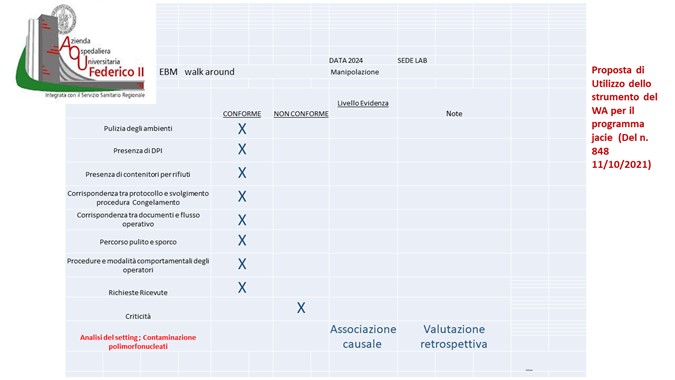
FIG 1 WA Card
Bibliography
- Sackett DL, Rosenberg WM, Gray JA, Haynes RB, Richardson WS Evidence based medicine: what it is and what it isn't. BMJ. 1996 Jan 13;312(7023):71-2. doi: 10.1136/bmj.312.7023.71.
- Madden K, Bhandari M Can Evidence-Based Medicine and Personalized Medicine Coexist? 2020 Jul 1. In: Rivière C, Vendittoli PA, editors. Personalized Hip and Knee Joint Replacement. Cham (CH): Springer; 2020. Chapter 1.
- Lawrence RJ(1), Lee SJ(2), Katona LJ(2)(3), De Bono S(4), Norton PJ(5), Avery S(6). A Self-Help Manual for Psychological Distress and Quality of Life During a Haemopoietic Stem-Cell Transplant: An Effectiveness and Acceptability Pilot. J Clin Psychol Med Settings. 2023 Dec;30(4):846-855. doi: 10.1007/s10880-022-09923-3. Epub 2022 Dec 29.
- Atkins L(1), Steer B(2), Ray H(2), Kiss N(2)(3)(4)(5)Implementing and sustaining an evidence-based nutrition service in a haematology unit for autologous stem cell transplant patients. Support Care Cancer. 2019 Mar;27(3):951-958. doi: 10.1007/s00520-018-4384-x. Epub 2018 Aug 2
- Simoneau TL(1), Kilbourn K(2), Spradley J(3), Laudenslager ML(3).An evidence-based stress management intervention for allogeneic hematopoietic stem cell transplant caregivers: development, feasibility and acceptability.Support Care Cancer. 2017 Aug;25(8):2515-2523. doi: 10.1007/s00520-017-3660-5. Epub 2017 Mar 10.
- Basson T, Montoya A, Neily J, Harmon L, Watts BV. Improving Patient Safety Culture: A Report of a Multifaceted Intervention. J Patient Saf. 2021 Dec 1;17(8):e1097-e1104.
- Peppino Mirabelli 1, Rosa Di Noto, Catia Lo Pardo, Paolo Morabito, Giovanna Abate, Marisa Gorrese, Maddalena Raia, Caterina Pascariello, Giulia Scalia, Marica Gemei, Elisabetta Mariotti, Luigi Del Vecchio. Extended flow cytometry characterization of normal bone marrow progenitor cells by simultaneous detection of aldehyde dehydrogenase and early hematopoietic antigens: implication for erythroid differentiation studies. BMC Physiol 2008 May 29:8:13.
- Mirabelli P, Di Noto R, Lo Pardo C, Morabito P, Abate G, Gorrese M, Raia M, Pascariello C, Scalia G, Gemei M, Mariotti E, Del Vecchio L. European flow cytometry quality assurance guidelines for the diagnosis of primary immune deficiencies and assessment of immune reconstitution following B cell depletion therapies and transplantation. Clin Cytometry B 2024 Nov;106(6):424-436. doi: 10.1002/cyto.b.22195. Epub 2024 Jun 28.
- Kelleher P, Greathead L, Whitby L, Brando B; UK NEQAS Leukocyte Immunophenotyping Steering Committee; Barnett D, Bloxham D, deTute R, Dunlop A, Farren T, Francis S, Payne D, Scott S, Snowden JA, Sorour Y, Stansfield E, Virgo P, Whitby A.Cytometry B Clin Cytom. 2024 Nov;106(6):424-436. doi: 10.1002/cyto.b.22195. Epub 2024 Jun 28.
Acknowledgments
The authors would like to thank Prof. Antonio Feliciello for his exact and capable direction of multidisciplinary integration of the workshop; they are also deeply grateful to the writer Wanda Marasco for the attentive and affectionate eye that inspired the awareness of reasoning, evidence and storytelling.
For more information visit the AUTHORS page of the Magazine