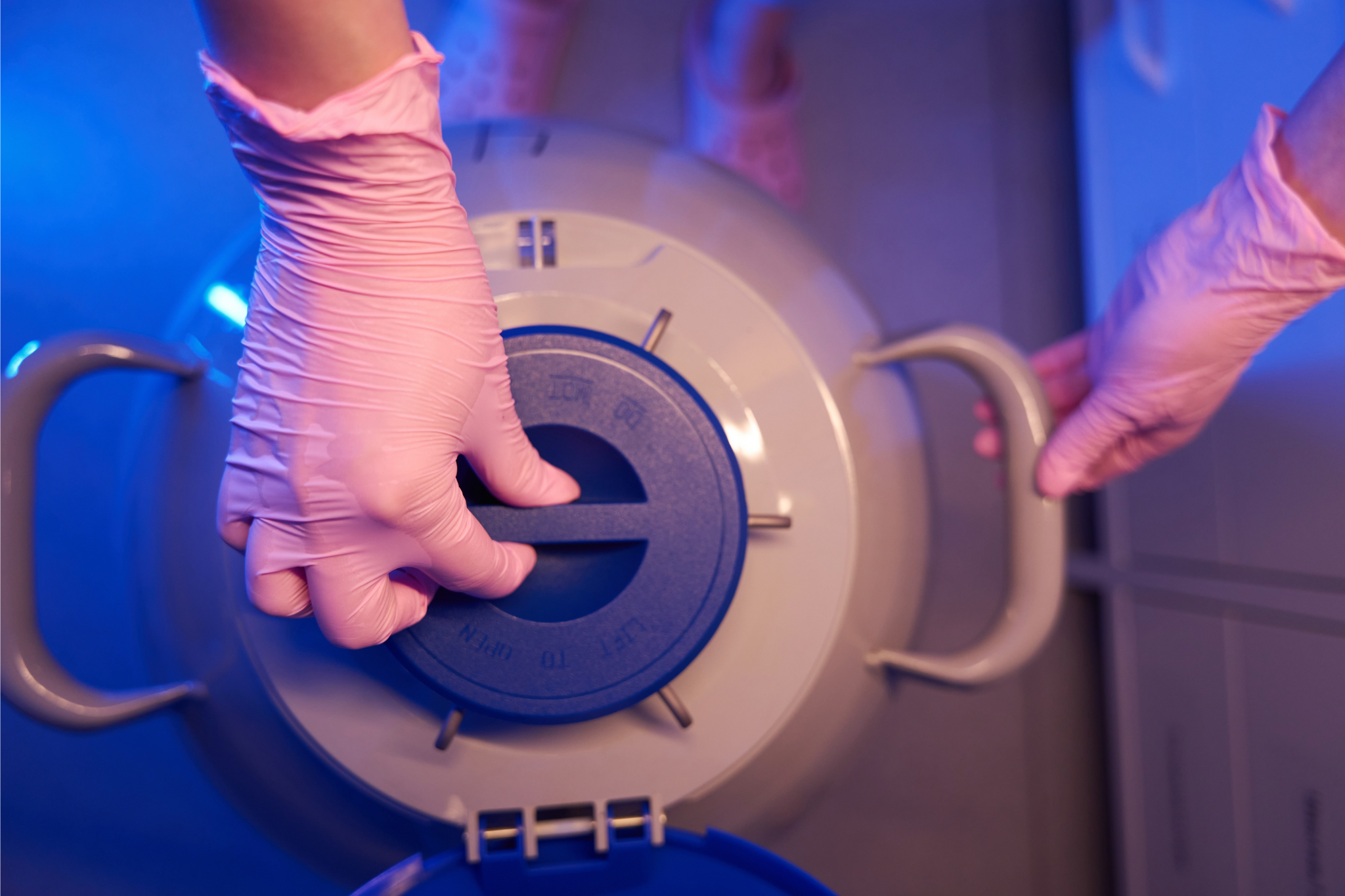
The first successful cord blood (CBU – acronym for cord blood unit) transplant was performed in 1988 in Paris, France, in a child with Fanconi anaemia. Cord blood, which contains haematopoietic stem cells (forming red, white and platelet cells), is used for transplants as an alternative to bone marrow, especially in cases of diseases such as leukaemia and other non-oncological blood disorders. The earliest stages of the clinical use of this cell source for transplantation were reserved exclusively for children, as adults, having a larger body surface area and weight, could not access this source, due to the relationship existing in what we globally call bone marrow transplantation, which requires a key requirement: number of cells per kg of weight of the potential patient who is to receive these cells.
The first CBU transplant, its history: In 1988, Dr Eliane Gluckman performed the first successful CBU transplant in a six-year-old boy with Fanconi anaemia. The donor was the child's sister, who was HLA-compatible and did not suffer from the disease. This transplant was a milestone in the treatment of blood diseases, demonstrating the potential of CBU in regenerating blood and immune system cells.
Development and expansion: After the initial success, CBU transplantation expanded to other countries and CBU units from non-consanguineous donors were used. Public and private CBU banks were established to store and distribute CBU units. Advances in CBU processing and cryopreservation technology have improved the quality and availability of CBUs for transplantation.
CBU cryopreservation has improved the quality and availability of CBUs for transplantation.
Benefits and uses: CBU cells are immunologically naïve, which means they are more tolerant to tissue incompatibility. This makes CBU an attractive option for transplantation in patients who do not have a fully compatible bone marrow donor. This is relevant because it is worth knowing and considering that if a family has CBU from their children, and the children, due to growth and increase in body surface area and weight, need it, being a match, the amount of cells from each sibling could be added and thus benefit the sick sibling in need of a transplant.
CBU is used in patients who do not have a fully matched bone marrow donor.
CBU is used to treat a variety of diseases, including leukaemia, lymphoma and other non-cancerous blood and immune system disorders. Over the past 10 years, clinical trials have emerged worldwide that are showing therapeutic benefits in diseases that were unknown in the early days of the therapeutic use of these cells. Among them:
- Autism Spectrum Disorder
- Neurological diseases, such as: Cerebral Palsy and Hypoxic-Ischaemic Encephalopathy
- Traumatic Brain Injury and Stroke
- Autoimmune Diseases such as Systemic Lupus Erythematosus and Rheumatoid Arthritis
- Therapeutic option to generate lymphocytes (cells belonging to white blood cells) directed at diseases such as Leukaemia, Lymphoma or Multiple Myeloma, with the technique of Targeted Cell Therapy, called CAR T Cell
CBU transplantation can be a viable option for patients of all ages, including children and adults.
Recent progress:Research is ongoing to improve the effectiveness of CBU transplantation, including the use of cell manipulation techniques and optimising donor selection.
New applications of CBU are being explored in areas such as the treatment of autoimmune diseases and tissue regeneration. Advances in science and technology have made CBU transplantation increasingly safe and effective, offering hope for the treatment of diseases that previously had no cure.
The CBU transplantation process is now being explored in areas such as the treatment of autoimmune diseases and tissue regeneration.
For this reason, beyond cells, science is now proving that integral components of cells, such as so-called intracellular vesicles, are revolutionising not only therapeutic, but also diagnostic options.
In detail:
Stem Cell Transplantation: Umbilical cord blood follows as an important source of stem cells for transplantation in diseases such as leukaemia and other blood disorders. The so-called classic indications of Bone Marrow Transplantation (BMT).
Now, as mentioned above, it is no longer just the classical indications, there is an infinity of potential and valuable uses of cellular treatment and in regenerative medicine, such as:
- Neurological Diseases: Research is being conducted to evaluate the potential of umbilical cord blood in the treatment of cerebral palsy, hypoxic-ischemic encephalopathy and other neurological diseases.
They are also being used in the treatment of neurological diseases.Autoimmune Diseases and Other DisordersThe benefits of umbilical cord stem cells are being investigated in autoimmune diseases, bone diseases, heart and vascular diseases, diabetes and other conditions.
Regenerative Therapy:
- Cord blood is being used in studies to assess its ability to repair damaged tissues in organs such as the brain, improving reperfusion and recovery.
In-Progress Research: Clinical trials with umbilical cord blood are being completed for the treatment of cerebral palsy, autism and traumatic brain injury, among other conditions as mentioned in previous paragraphs.
But let us return to a line of great value, all that goes beyond cells, I am referring to its integrative part: EV and Exosomes.
Detailed explanation:
Extracellular Vesicles (EVs): These refer to a diverse group of small vesicles, of different sizes and origins, that are secreted by cells into the extracellular space. EVs are important in intercellular communication and can transport biomolecules (proteins, lipids, nucleic acids) between cells. And they are present in CBU cells.
Exosomes: They are a specific type of EV, smaller in size (between 30 and 150 nanometres) and originate in endosomes, which are intracellular compartments. Exosomes are formed through a process called invagination of the endosomal membrane, creating intraluminal vesicles that are subsequently released into the extracellular space.
Role in intercellular communication: EVs, including exosomes, participate in cell-to-cell communication, carrying molecules that can modify the behaviour of recipient cells.
Biomarkers and diagnosis:The content of EVs can reflect the state of the cell of origin and has been used as a biomarker in various diseases, particularly in cancer diagnostic studies.
Applications in research and therapy: Exosomes and other EVs are being investigated as tools for disease diagnosis and as potential therapies, as mentioned in an article by “IMED Hospitales”;
Exosomes, as I mentioned, are microscopic vesicles that play an essential role in cell communication. They are used in beauty treatments for their ability to improve cell regeneration, hydration and skin firmness. Plant exosomes, such as those offered in the EXO|E line, are plant-derived extracts that enhance skin repair and revitalisation, helping to combat signs of ageing and photo-ageing.
These treatments work by promoting collagen production and improving skin texture, providing a younger, healthier appearance. Moreover, as they are biocompatible, they have a low risk of adverse reactions, making them a safe option for various skin types.
These treatments work by promoting collagen production and improving skin texture, providing a more youthful appearance.
Exosome therapy is a field in vogue in regenerative medicine that exploits the potential of exosomes, tiny extracellular vesicles, to facilitate healing and improve cell function. Intravenous (IV) infusion of exosomes has become a novel treatment, with promising results in clinical trials, such as reducing inflammation and improving metabolic processes.
Conclusions: Nowadays, umbilical cord blood can be used as a bone marrow substitute for stem cell transplants. More than 80 diseases can be treated, including different types of cancer, non-cancerous blood diseases, genetic and metabolic diseases.
70% of patients needing a stem cell transplant do not have a matching donor in their family and their doctor has to search for donors in public registries.
The National Bone Marrow Donor Programme in the USA (BeTheMatch.org), as well as Anthony Nolan in London for European requirements, are dedicated to finding compatible donors for patients worldwide. There is a shortage of compatible bone marrow donors for minority patients.
Cord blood donations are especially useful for patients of mixed or minority genealogy because the cord blood does not have to be as compatible with the patient as is the case with stem cells from a bone marrow donor.
They are not as compatible with the patient as they are with stem cells from a bone marrow donor.
How can umbilical cord blood stem cells be used in the future?
Medical research is developing new therapies where stem cells help the body recover from various types of injuries and even repair itself.
The umbilical cord blood stem cells can be used in the future.
Children who have their umbilical cord blood stored may have more options regarding possible medical treatments throughout their lives. An early study using the umbilical cord blood together with other therapies indicates possible benefits in the treatment of cerebral palsy.
In the United States and other countries in Europe and Asia, clinical trials in development are using umbilical cord blood as a treatment for cerebral palsy and other similar diseases, brain injuries, spinal cord injuries, autism, acquired hearing loss, and type 1 diabetes, among others.
They are also using cord blood as a treatment for cerebral palsy and other similar diseases.
For some years now, it has been discovered that umbilical cord tissue has other stem cells called Mesenchymal cells of great therapeutic value.
What are mesenchymal cells?
Mesenchymal cells are adult stem cells found in various tissues, including bone marrow (bone carac’n), adipose tissue and the umbilical cord. They are multipotent cells, which means that they can differentiate into various cell types, such as bone, cartilage and fat cells. They also have immunomodulatory properties, which means they can help regulate the immune system.
How are they used in cell therapy?
In cell therapy with mesenchymal cells, cells are extracted from the same patient, autologous use (adipose tissue, bone marrow or cord tissue) or from a donor, as they do not have the donor – recipient compatibility barrier, as is the case with haematopoietic stem cells.
These cells, mesenchymal cells, are isolated, processed in the laboratory and expanded to obtain a sufficient quantity for treatment. Then, they are re-injected into the patient at the site of the lesion or disease.
These emerging therapies, whether cellular (haematopoietic for non-traditional uses, such as mesenchymal) or using exosomes (EVs), essential parts that make up the cell, are scientifically demonstrating a considerable increase in the possibilities of using autologous umbilical cord blood and/or mesenchymal cells and their products.
1988 – 2025: Only 37 years have passed since that first successful CBU transplant. Today, there is a range of potential therapeutic uses that were unthinkable back then.
For this reason, those who have the possibility to store their own CBUs — not only haematopoietic CBUs, but also Mesenchymal Cells (MSCs) and their products, present both in placental blood and in the Wharton's jelly of the umbilical cord tissue — have, or will have in the future if they decide to store them, a biological material of the highest value.